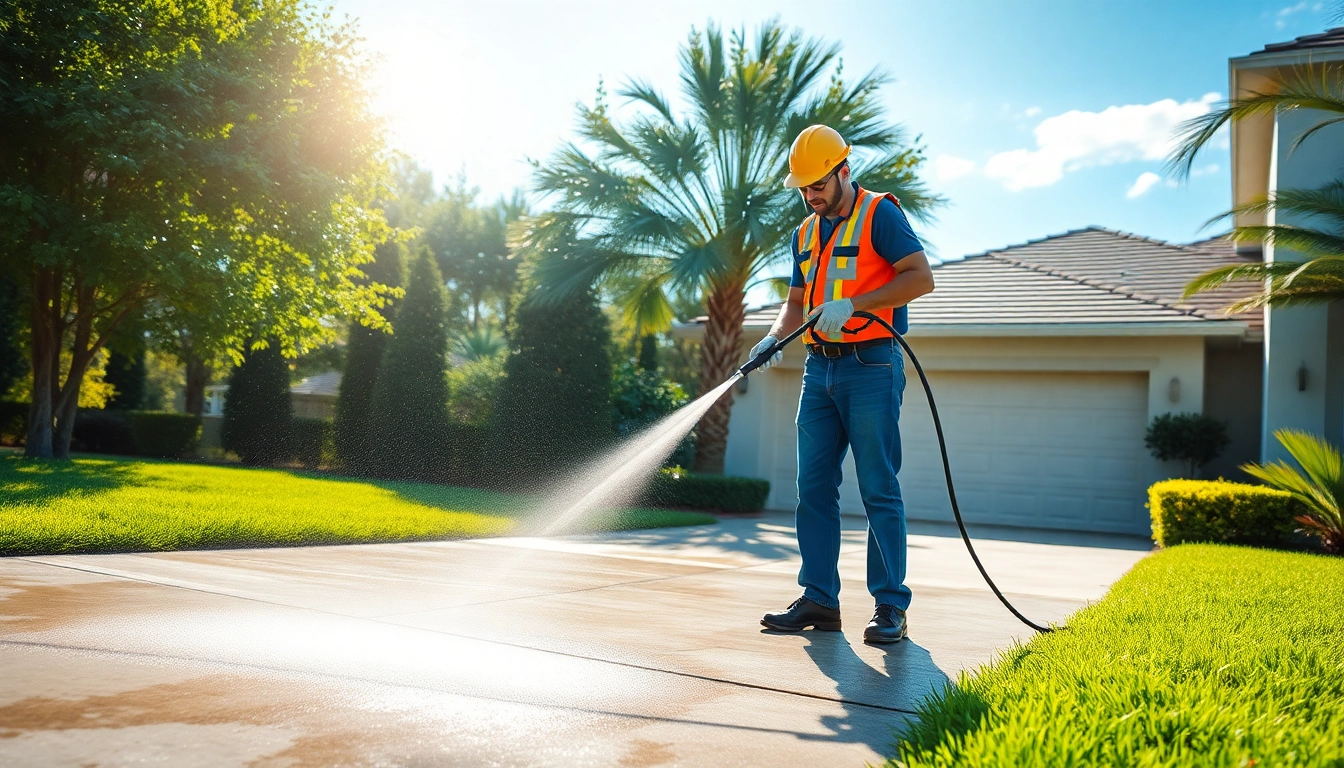
Understanding Driveway Pressure Washing
Driveway pressure washing is a critical service that not only enhances the aesthetic appeal of your property but also significantly prolongs the lifespan of your driveway surfaces. With the accumulation of dirt, grime, and stains over time, a pressure wash is essential for maintaining cleanliness and functionality. Regular pressure washing can prevent the buildup of harmful substances that lead to costly repairs down the line. If you’re looking for expert insight into effective driveway pressure wash techniques, you’ve come to the right place.
What is Driveway Pressure Washing?
Driveway pressure washing involves using high-pressure water spray to remove dirt, oil stains, algae, and other debris from concrete, asphalt, or stone surfaces. This method is favored for its efficiency in restoring surfaces to their original condition without the need for harsh chemicals. Professional pressure washing services typically utilize specialized equipment that allows for adjustable pressure settings, ensuring that each cleaning is tailored to the specific surface being treated.
Benefits of Regular Cleaning
- Enhanced Curb Appeal: A clean driveway improves the overall aesthetic of your home or business, making a good first impression on visitors and potential buyers.
- Prevention of Damage: Regular pressure washing helps to remove substances that can lead to deterioration, such as mold and mildew, preserving the integrity of the surface.
- Safety: Cleaning your driveway removes slippery substances that can lead to accidents, enhancing safety for you and your guests.
- Increased Property Value: Regular maintenance, including pressure washing, can increase property value by preserving the home’s exterior condition.
Common Myths Debunked
There are several misconceptions surrounding driveway pressure washing that can lead homeowners to avoid this essential service.
- Myth 1: Pressure washing damages driveways.
- Myth 2: It’s a DIY job and easy to do.
- Myth 3: All pressure washers are the same.
While improper techniques can cause damage, professional services use the right equipment and techniques to clean surfaces safely.
Although DIY pressure washing can be done, without the right training, you may not achieve the best results or may even damage your surface.
Pressure washers come in different types and strengths, making it crucial for homeowners to choose the right equipment for their specific needs.
Choosing the Right Equipment
Selecting the appropriate equipment is crucial for effective driveway pressure washing. The type of pressure washer and its accessories can greatly influence the outcome of your cleaning.
Types of Pressure Washers Explained
- Electric Pressure Washers: Ideal for light cleaning tasks, these are easier to handle and are less noisy. However, they are generally less powerful than gas models.
- Gas Pressure Washers: More suited for heavy-duty tasks, gas models offer higher pressure and are favored for their mobility and effectiveness in cleaning tough spots.
- Commercial Pressure Washers: These units are designed for extensive and continuous use, making them ideal for businesses that require regular cleaning of large areas.
Essential Accessories for a Thorough Clean
To enhance your pressure washing experience, consider investing in these accessories:
- Surface Cleaner: This attachment provides even cleaning on flat surfaces, reducing the chance of streaking.
- Extension Wands: These add-ons allow for cleaning hard-to-reach areas without straining your back.
- Chemical Injectors: For stubborn stains, injectors allow you to mix cleaning solutions with water for a more effective clean.
Eco-Friendly Options for Clean Driveways
In recent years, sustainability has become a focus in pressure washing. Many service providers are now offering eco-friendly cleaning solutions that effectively remove dirt and grime without harming the environment. These biodegradable agents ensure that while your driveway is cleaned, local waterways and ecosystems remain protected.
Step-by-Step Guide to Driveway Pressure Washing
For those considering a DIY approach, following a structured method is essential for effective pressure washing.
Preparing Your Driveway for Cleaning
- Clear the Area: Remove any vehicles, furniture, or debris from the driveway to ensure a clean working space.
- Inspect for Damage: Check for cracks or damage that might worsen under high pressure; consider making necessary repairs before washing.
- Wet the Area: Spraying the driveway down with water can help loosen up dirt and make the cleaning process easier.
Techniques for Effective Pressure Washing
When using the pressure washer, keep the following techniques in mind:
- Start from the Top: Begin washing at the highest point of the driveway and work downwards to prevent dirt from being pushed onto already cleaned areas.
- Maintain Distance: Keep the nozzle at least 12 inches away from the surface to avoid damage.
- Even Sweeping Motion: Use a consistent sweeping motion to ensure even cleaning and avoid streaks.
Post-Cleaning Care and Maintenance
After pressure washing, proper maintenance can help keep your driveway looking pristine:
- Drying: Allow the surface to dry completely to prevent slip hazards.
- Sealant Application: Consider applying a sealant to protect the surface from future stains and damage.
- Regular Inspections: Check for any emerging issues, such as cracks or stains, that may need timely attention.
Cost Considerations for Driveway Pressure Washing
The cost of driveway pressure washing can vary widely based on several factors, including location, surface type, and service provider.
Average Pricing for Professional Services
Generally, professional pressure washing services can range from $130 to $220 for standard driveways. The price may increase for larger properties or those requiring more extensive cleaning methods.
DIY vs. Professional: What to Consider
While DIY pressure washing can save money, consider the following factors:
- Time: Professional services can complete the job faster, allowing you to focus on other tasks.
- Quality of Results: Professionals often have more experience and better equipment, potentially resulting in a cleaner driveway.
- Safety: High-pressure cleaning can pose risks; professionals are trained to minimize these dangers.
Factors Influencing Pricing in 2025
Several trends may affect pricing in the coming years:
- Inflation: As the cost of materials and services increases, pressure washing prices may reflect that trend.
- Technological Advances: New equipment could either lower operating costs or increase prices based on features.
- Regulations: Stricter environmental regulations may lead to changes in cost structures as companies adapt.
Future Trends in Pressure Washing
The pressure washing industry is continuously evolving. Staying updated on upcoming trends is essential for both homeowners and service providers.
Innovations in Cleaning Technology
New technologies, including advanced pressure washer models featuring smart interfaces and automated cleaning modes, are becoming more common. These innovations dramatically enhance efficiency and effectiveness, offering superior cleaning solutions.
Sustainability and Eco-Conscious Practices
As environmental issues become more pressing, many pressure washing companies are adopting sustainable practices. This includes using biodegradable detergents and water reclamation systems to minimize waste.
Consumer Preferences Shaping the Industry
Today’s consumers are more informed and concerned about their environmental footprint. This has led to increased demand for eco-friendly services, pushing companies to adapt their offerings to include greener cleaning methods.